
Wedding Tips · October 16, 2026
How Can A Chicago Wedding DJ Build A Dance Floor That Fills Naturally?
By Paul Michaels Events
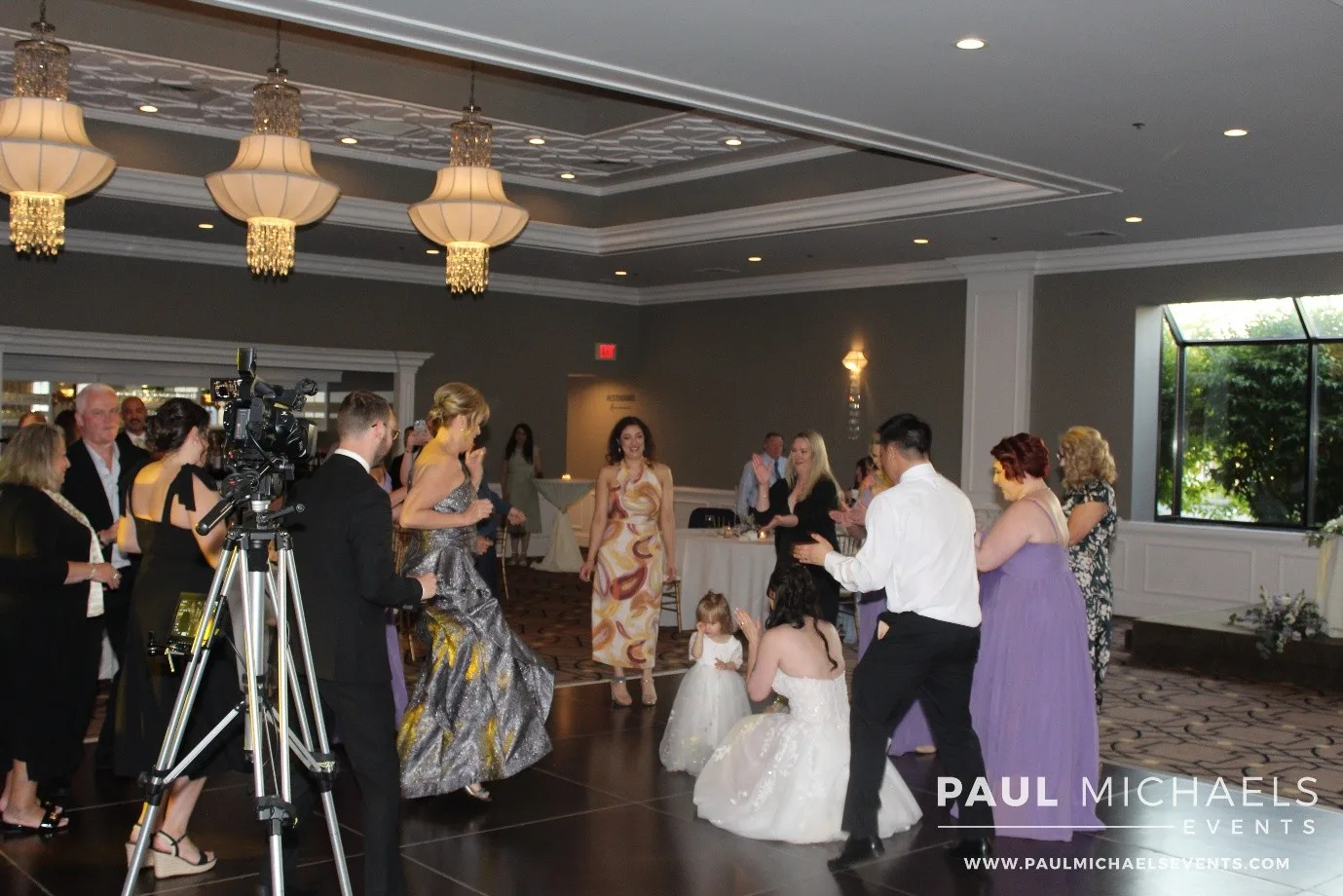
A great wedding dance floor does not need a list of games or a DJ constantly
telling guests what to do. It starts with understanding the room, the couple,
the music, and the pace of the reception. For couples searching for a wedding
DJ in Chicago, the goal should be more than finding someone who can
play a playlist. The right DJ knows how to build energy gradually, recognize
when guests are ready to dance, and make the transition from dinner to dancing
feel natural.
At Paul Michaels Events, we approach a wedding reception as a series of
connected moments. The music, announcements, lighting, and timeline all work
together so the dance floor feels inviting rather than forced.
What Makes A Dance Floor Feel
Naturally Full?
A full dance floor usually develops through momentum. Guests need a reason
to leave their tables, a comfortable place to gather, and music that gives
different parts of the room an opportunity to connect.
That starts with the timeline. If dinner runs late, speeches stretch longer
than expected, or the transition into dancing feels abrupt, guests may not
immediately shift into party mode. An experienced DJ watches the schedule and
works with the planner, venue, photographer, and other vendors to keep the
evening moving.
The music matters just as much. Instead of treating a wedding as a fixed
playlist, a DJ can watch how guests respond to each song and adjust the
direction of the set. A familiar favorite may bring more people onto the floor,
while a well-timed change in tempo or genre can keep them there.
How Does A DJ Read The Room?
Reading the room is one of the most important parts of wedding
entertainment, and it is not something a playlist can do on its own.
A professional Chicago wedding DJ watches what is happening throughout the
reception. Are guests already gathering near the dance floor? Are people still
finishing dinner? Did a particular song bring a larger group onto the floor?
Are different age groups responding to different styles of music?
Those observations help shape the next decision.
For example, a reception may begin with a mix of recognizable favorites that
appeal to a broad group. As more guests join, the DJ can build momentum without
making the music feel predictable. If the floor starts to thin, the DJ can
recognize that change and adjust before the energy disappears completely.
The goal is not to manipulate guests into dancing. It is to understand what
they are responding to and create a soundtrack that makes dancing feel like the
obvious next part of the evening.
Why Does Music Flow Matter?
A strong wedding set is about more than choosing good songs. The order and
transitions between songs can affect whether the room feels connected or
interrupted.
Abrupt changes can make a dance floor feel disjointed. A thoughtful DJ
considers tempo, style, familiarity, and the overall mood when moving from one
song to another. The result is a continuous experience that gives guests fewer
reasons to step away.
Music flow also allows a DJ to serve a mixed crowd without making the
reception feel divided. Chicago weddings can bring together several
generations, cultural backgrounds, and musical preferences. The challenge is
not to play every possible song. It is to create enough musical connections
that different groups feel included throughout the night.
At Paul Michaels Events, the planning process gives couples a chance to
share must-play songs, do-not-play selections, and other preferences ahead of
time. The DJ then uses that information as a guide while making real-time
decisions during the reception.
How Does The Dinner-To-Dancing
Transition Affect The Party?
One of the most important moments of the evening happens when dinner ends
and dancing begins. This transition can determine whether guests remain seated
or begin moving toward the dance floor.
There is no single sequence that works for every wedding. Some couples want
to move directly from dinner into their first dance and open the floor. Others
may have speeches, parent dances, cake cutting, or another reception moment
before the main dance set.
The DJ's role is to understand the couple's timeline and make each
transition clear. A concise announcement can let guests know what is happening
without turning the microphone into the center of attention.
The timing of the first few songs matters, too. Starting with music that
feels familiar and appropriate for the crowd can make it easier for guests to
participate. From there, the DJ can build the set based on the response in the
room.
What Role Does Lighting Play?
Lighting can influence how a dance floor feels without becoming a
distraction.
Professional dance-floor lighting helps define the area where the party is
happening and can create a visual shift when the reception moves from dinner into
dancing. The lighting can complement the venue and wedding design while giving
the dance floor its own sense of energy.
This is especially useful when the reception space serves multiple purposes.
A room that feels formal during dinner can take on a different atmosphere once
dancing begins. The change does not have to be dramatic or flashy. Well-planned
lighting can simply make the transition feel intentional.
Paul Michaels Events uses professional-grade sound and dance-floor lighting
sized to the room, with a clean presentation designed to work with the overall
look of the event.
Can An Anniversary Dance Work
Without Turning Into A Competition?
If a couple chooses to include an Anniversary Dance, it can be a meaningful
way to recognize married family members and friends.
The focus should not be on creating a competition. Instead, the DJ can
invite married couples onto the dance floor and gradually ask couples who have
been married for fewer years to step off until the longest-married couple
remains. The moment becomes a way to honor that couple and recognize the
example they have provided.
Used thoughtfully, an Anniversary Dance can also help bring guests onto the
dance floor early in the evening without relying on gimmicks. It gives people a
meaningful reason to participate and creates a moment that is connected to the
celebration itself.
How Can Couples Help Their DJ Build
The Right Dance Floor?
Couples do not need to plan every song or choreograph every moment. Clear
communication is more useful.
Before the wedding, share the music that matters most to you. Identify
songs, artists, genres, or traditions you want included, along with anything
you definitely do not want played. Tell your DJ about important family
dynamics, cultural traditions, or reception moments that could affect the flow
of the evening.
It also helps to be realistic about the type of reception you want. A formal
dinner followed by several hours of dancing will have a different rhythm from a
cocktail-style celebration with a short dance set.
The more your DJ understands about your guests and your priorities, the
better they can make decisions during the event.
Why Does Experience Matter For A
Chicago Wedding DJ?
Wedding entertainment involves dozens of small decisions that guests may
never notice when everything is going well. The DJ needs to understand the
timeline, communicate with vendors, manage announcements, monitor the room, and
adjust the music as the night develops.
Experience also matters when the unexpected happens. A timeline can shift. A
speech can run long. A song may not get the response expected. A vendor may
need to coordinate a change. A professional team should be prepared to adapt
without making the couple responsible for solving the problem.
Paul Michaels Events has been entertaining Chicago weddings for more than 20
years and has produced more than 600 weddings and events. The company takes a
personal, detail-driven approach, with planning support, professional sound and
lighting, backup equipment, and coordination with the venue and other vendors.
The result is not a formula for forcing people onto the dance floor. It is a
carefully planned environment where good music, good timing, and attentive
entertainment give guests plenty of reasons to stay.
Plan A Chicago Wedding Dance Floor
That Feels Like Your Own
Your wedding does not need party games or forced participation to create an
energetic dance floor. The strongest celebrations often come from a DJ who
understands when to build energy, when to change direction, and when to let the
music speak for itself.
If you are looking for a Chicago wedding DJ who takes a personal, polished approach to reception entertainment, Paul Michaels Events can help you plan the music and timeline around your celebration. From the first conversation through the last song, the focus stays on creating an experience that feels natural to you and your guests.
Frequently Asked Questions
1. How far in
advance should we book a Chicago wedding DJ?
Most couples book 9 to 15 months out, with popular spring and fall Saturdays
often booking first. It is still worth checking availability if your date is
closer.
2. Do we have to
choose every song for our wedding?
No. Couples can provide must-play songs, do-not-play selections, and other
preferences through the planning process. Your DJ can use that information
while reading the room and making real-time music decisions.
3. How does a DJ
know when to change the music?
A DJ watches the dance floor and listens to the room. Guest participation,
song response, age groups, energy level, and the timeline can all help
determine when to stay with a style or move in a new direction.
4. Can lighting
really affect the dance floor?
Lighting helps define the dance area and can signal the transition from
dinner to dancing. It can also complement the venue design while creating a
more focused atmosphere for the dance floor.
5. Should we
include an Anniversary Dance?
If it fits your family and reception style, an Anniversary Dance can be a
meaningful way to honor the longest-married couple. It should be presented as a
recognition moment rather than a competition.
What Does A Professional Wedding DJ
Handle Besides Music?
A wedding DJ may also serve as the MC, guide key reception moments,
coordinate with other vendors, manage announcements, and adjust the music and
timing throughout the event. At Paul Michaels Events, the DJ and team also work
with the venue and other vendors to keep the reception moving smoothly.